Everybody knows that extending your home needs Planning Permission - although sometimes it doesn’t. Most are aware there are Building Regulations - your builder will sort that out if you don’t. But when planning an extension or loft conversion, the Party Wall etc Act.1996 often catches homeowners by surprise. Here are the five most damaging Party Wall mistakes and how to avoid them.
1. Starting Work Without Proper Notice
The biggest mistake is to start work without having dealt with Party Wall questions first. We've heard of homeowners forced to stop mid-construction or worse when neighbours think you got it wrong.
The result? Work halted, builders standing idle but still charging, legal fees mounting and court injunctions. In one case, a homeowner (not one of our jobs) had to remove newly installed steelwork because proper procedures weren't followed. And afterwards neighbours not speaking.
The fix: Serve notice at least 2 months before any structural work or excavations, three if you can. See our FAQ for exact timelines. Do it as soon as you apply for planning permission.
2. Forgetting the 3-Metre Rule
It’s the Party Wall etc. Act. Those three little letters are mostly about excavations - for drains as well as foundations. In tightly built up South West London that means almost any extension will have some kind of trench within 3m of the house (or outbuilding) next door. Old foundations are generally shallow. Yours will be going deeper.
The fix: If you are digging anywhere within 3m of next door serve notice, even if it has to say our foundations ‘may’ be below the level of yours (that’s an imaginary horizontal line in the ground, not just actually digging under theirs). See above for timing.
3. Not Agreeing the Boundary
You may think that your land runs up to the fence. But which side? And is that the original 19th Century fence (probably not) or one shifted over because the fencing contractor before last couldn’t be bothered to dig out the old post bases?
In one case the fence behind a straight regular terrace curved as far as 300mm, a whole foot, closer to our client’s house than perhaps the original had been, but next door still insisted that was the land he had bought.
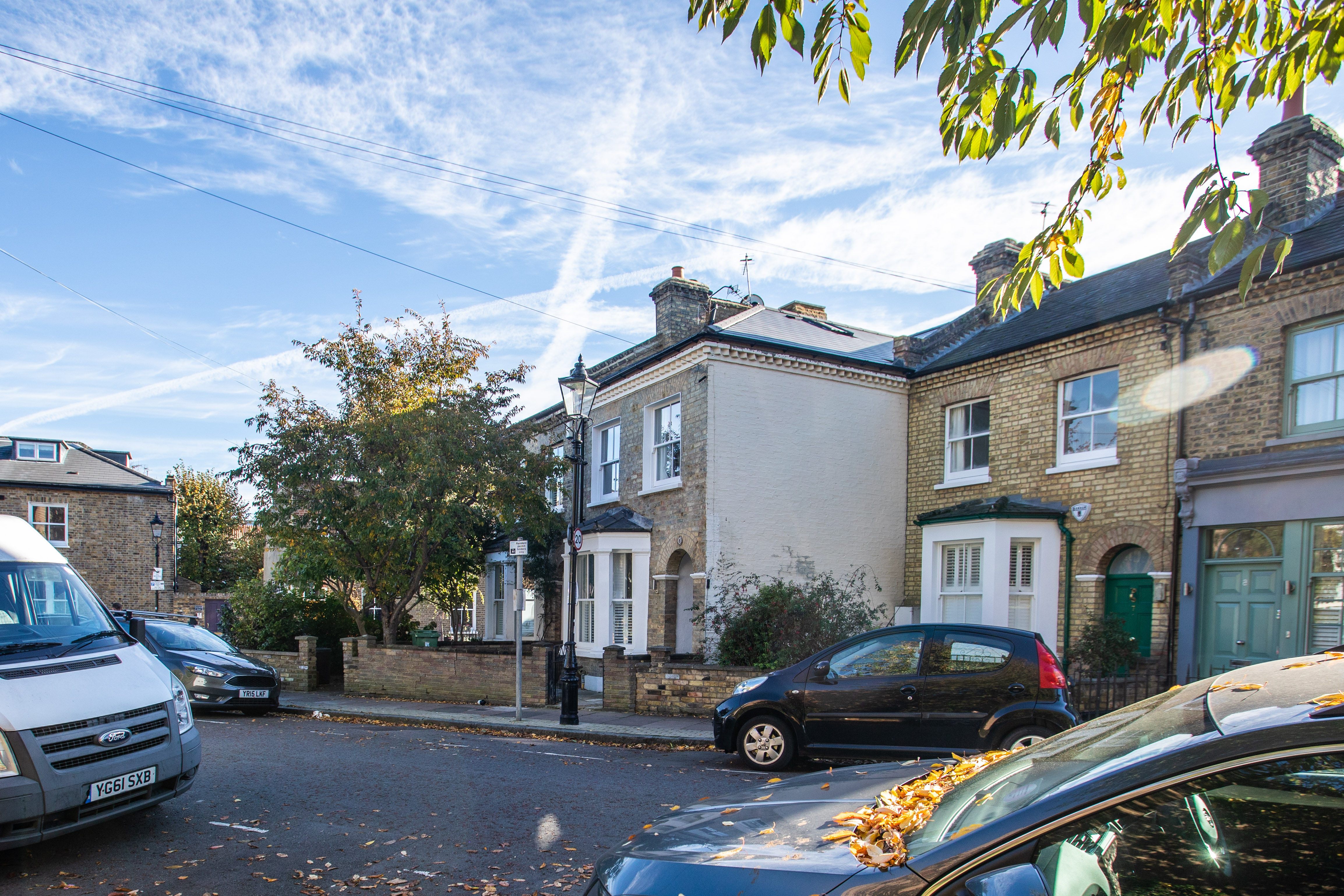
Not all Party Walls are ‘party’, particularly in Victorian streets such as those we see in Putney, Fulham and similar areas which were developed a few houses at a time. The different builders each built to the edge of the land they had, resulting in two walls back to back on the boundary line.
The fix: Talk to your neighbours at the beginning of the project. It may not change their minds, but gives you time to check the deeds, or at the worst to design around the problem. Boundary disputes are costly and usually inconclusive. Don’t go there.
4. Not Giving Notice to All Relevant Neighbours.
If next door is a freehold owner occupied house, there’s one owner (or is it joint husband and wife?). But a similar looking building might be three flats all on lease from a management company who in turn have a lease from a ground landlord, with two of them rented by tenants who only know the letting agent’s name. That’s five notices. If you know who’s who they can all be sent at once. The clock starts when you send the final one - to the Panama registered holding company.
The fix: Once again the advice is to start early. Talk to the residents and find out who’s who. Check with the Land Registry if in doubt. See if you can get one resident owner ‘on side’ to jolly the others along.
5. Assuming Verbal Agreements Are Enough
"My neighbour said it's fine" offers zero legal protection. It’s funny how often that agreement is forgotten once the noisy building works starts. Suddenly every rotten window and clogged drain ‘was caused by your builders’. Without written agreement or an Award you are breaking the law. Without a Schedule of Condition, you have no proof the damage existed before your work. Subsidence claims get expensive.
The fix: Always serve notice (even if they have already agreed), get written consent or a formal Party Wall Award. Either way make a record of the condition of your neighbour’s building before work starts to avoid disputes about damage.
Protect Your Project
Party Wall mistakes aren't just expensive - they damage neighbour relationships and delay your dream home. The good news? They're entirely avoidable with proper planning. Start on time and the Act has a mechanism to get agreement (an Award) even with neighbours who refuse to respond.
Section 8 even allows you to access next door by right for some works. Use that.
Next steps:
Contact us for expert advice on your specific project
At Andrew Catto Architects, we guide Putney homeowners through every step of their renovation journey - including the Party Wall maze.
p.s. It’s not called the ‘Third Party Wall’. But we don’t mind.